Playing a game#
This chapter is the player's side of an RPG Tsukuru GB game: what the screen shows and what each command does. The same rules hold in the sample game NOBLE CAT, in your own game and in a test run of it. How battles work gives the battle's rules in full, and Events shows how a maker builds the shops, inns, doors and save points a player meets here.
Starting#
Game ゲーム and Sample サンプル on the title both start with the game's opening: the author's name with 「PRESENTS」, then the game's title screen, its title in large letters over the picture and song its maker chose. A or START there offers Continue つづきから or From the Start はじめから; B goes back to the cartridge's title (except in the user-game mode, Getting started).
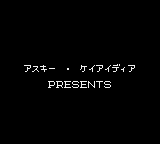
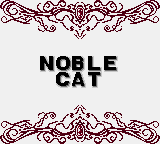
- Continue lists the play saves of this game only: a save of the sample from Sample, a save of your game from Game. With none, it says 「データが ありません!」, there's no data. The cursor starts on Continue only when there is something to continue.
- From the Start puts the party where the maker set it, with the gold the maker gave it, and battles on.
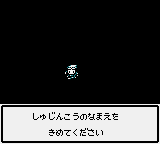
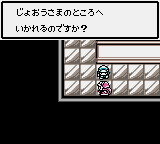
There is no naming screen of its own. A game that wants the player to name a hero asks with an event, as NOBLE CAT does at once: its first scene is a dark screen, the hero, and 「しゅじんこうのなまえを きめてください」, "please decide the hero's name", over the keyboard. A hero's name is up to five characters.
Rooms and the world map#
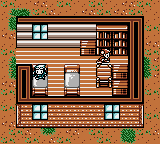
A map is a building of rooms, one screen each. A room is 10 cells across and 9 down, with no scrolling: walking off a room's edge enters the next room, and stairs lead to the floors above and below. Castles have up to four floors, towns and villages two, dungeons seven.
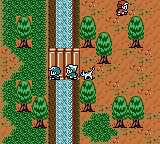
The world map フィールド is one of four built into the ROM. It scrolls with the party, and it wraps around: walk off one side and you come in at the other. Its castles, towns, villages and dungeons are markers on it, and the party goes in from there.
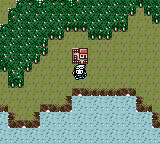
- The d-pad walks. In a room, a new direction first only turns the party, and it walks after a moment's hold. On the world map, walking into something that blocks the way bumps .
- A talks to or checks what is ahead: a person, a sign, a chest, or a shopkeeper across a counter. There is no Talk or Search command; A does both.
- B opens the command window (below).
- Random battles come on the world map, and in maps on the floors the maker gave monsters (Maps and the world): a chance of 17 in 256 at each step, and never more than fifteen steps apart.
The party walks as a line, up to three heroes, the leader first. People in a room stand, wander or walk to and fro as their maker set them; some events start when the party touches them, others wait for A, others start by themselves.
The command window#
B opens the command window at the bottom of the screen, six commands in three columns of two; B closes it. Play stops while it is open.
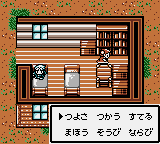 123456
- 1 Status つよさ the party and the gold; a hero's page; Save
- 2 Magic まほう cast a healing or travel spell
- 3 Use つかう use an item from the bag
- 4 Equip そうび weapon, armour, shield and other
- 5 Discard すてる throw an item away
- 6 Order ならび put the party in a new order
Status#
Status つよさ shows the party, each hero's level, HP and MP, and the gold, with two choices under them: see a hero's status つよさを みる, and save セーブ する (below).
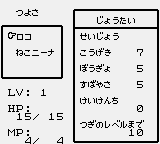
A hero's page shows the condition じょうたい (normal is せいじょう), attack, defence and speed こうげき ぼうぎょ すばやさ, the experience けいけんち and the experience to the next level. The database has how the figures grow.
Magic#
Magic まほう asks who casts, then lists that hero's spells. Outside battle only the first ten spell slots do anything, because a spell's effect belongs to its slot (The database):
| Spells | Effect | Outside battle |
|---|---|---|
| 1–3 | Heal one | Restores HP to one hero, up to the maximum |
| 4–5 | Heal all | Restores HP to the party |
| 6 | Teleport | On the world map: to a place the party has visited |
| 7 | Exit | Out of a map onto the world map |
| 8–10 | Cure poison, cure paralysis, cure every status | Works as in battle |
| 11–40 | Wake, revive, the buffs, the attacks | Nothing: なにも おこらなかった, and the MP is spent all the same |
A paralysed hero can't cast (「は マヒしている!」), and too little MP gives 「MPが たりません」. The MP is spent even when nothing happens: a heal with no one hurt, a teleport with nowhere to go, or spells 11 to 40.
Use#
Use つかう lists the party's one shared bag, up to 99 of each item. The healing items and the items that cast the first ten spells work outside battle; the other spell items and the key items answer 「つかえません」, can't be used, and stay. An item is used up even when 「なにも おこらなかった」, nothing happened. A heal never restores more than is missing.
Equip#
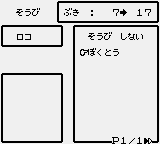
Equip そうび has four slots: weapon ぶき, armour よろい, shield たて and other そのた. Each lists only the items of that kind which this hero may wear and of which a copy is free, and shows the attack, defence and speed the change would give.
Discard#
Discard すてる throws one item away after 「すててもいいですか?」, "OK to throw it away?". An equipped copy isn't offered, and an item with a price of 0 can't be thrown away: 「この アイテムは すてられません」. That is how a maker protects key items.
Order#
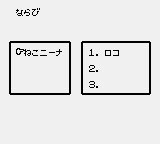
Order ならび rearranges the party: pick the heroes in their new order.
Saving#
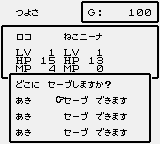
A game can be saved anywhere on foot, in a map as on the world map: Status → Save セーブ する. The game asks 「どこに セーブしますか?」, where to save, and lists three slots, each marked empty あき or with the game it holds (ユーザー your game, サンプル the sample, テスト test play) and its leader's name and level. A saves at once, with no question before writing over a slot, then 「セーブ しました!」, saved. In the ship or the airship, Save isn't offered.
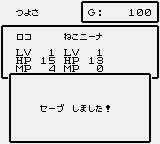
A maker can also place a save point セーブ ポイント as an event: the same slots and the same save. A save point doesn't heal.
A save keeps the party and its order, every hero's level, stats, HP, MP, equipment and status, the gold, the bag, the switches and the chests opened, where the party stands, the vehicles' places, the song and the screen's tint. Game Over and the soft reset keep nothing: play since the last save is lost.
Shops and inns#
Shops and inns are events: a maker stands someone behind a counter and gives them the command. So their windows are the same in every game.
A shop おみせ sells up to four items. It offers Buy かう, Sell うる and Leave でる, and after each deal asks 「ほかに ごようは ありますか?」, anything else?
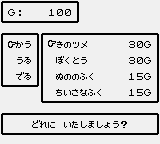
- Buying: pick an item, then how many, up to nine at a time and 99 in the bag. Too many: 「そんなにいっぱい、もてませんよ!」 ("you can't carry that many!"); too little gold: 「おかねが たりないようですが…」.
- Selling: the bag less what is equipped, up to nine at a time, for half the price, rounded up. An item priced 0 can't be sold: 「それを うるなんて とんでもない!」 ("sell that? Out of the question!").
- Gold stops at 999,999, from shops, battles and events alike.
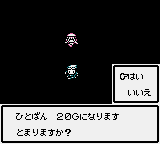
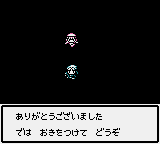
An inn やどや names its price, 「ひとばん NG に なります / とまりますか?」 (a night is N gold; will you stay?), with Yes はい and No いいえ. Staying fades out, plays the inn's tune , and fills every hero's HP and MP, clears every status, and revives the fallen. Short of gold, the innkeeper says so and nothing happens.
The ship and the airship#
A game can have a ship and an airship, on the world map only. Where each waits at the start and how it looks are the maker's choice (The database). Walking onto one boards it: the leader becomes the vehicle and its song plays. Each stays where it was left.
| Ship | Airship | |
|---|---|---|
| Moves over | Water only | Anything |
| Speed | As on foot | Fast |
| Random battles | Yes | None |
| Places on the world map | Can't enter them | Lands beside them |
| Getting off | A: onto walkable land straight ahead; otherwise a buzz | A: on a walkable cell with nothing on it and no place; otherwise a buzz |
| The command window | Everything but Save | The same |
Battles#
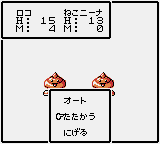
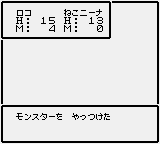
A battle opens with a flash . Up to three monsters stand in a row on a plain white field, with no backdrop; the party's names, HP (H) and MP (M) are across the top. A lone hero meets at most two.
Commands#
Each round opens with a window for the whole party:
| Command | Japanese | What it does |
|---|---|---|
| Auto | オート | The heroes choose for themselves, round after round, until START stops it after the current round |
| Fight | たたかう | Each hero in turn gets Attack こうげき, Magic まほう, Defend ぼうぎょ or Item どうぐ; B on the first hero goes back |
| Run | にげる | Try to escape; a failure gives the monsters a round to themselves. An event's battle can't be fled |
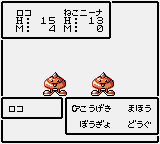
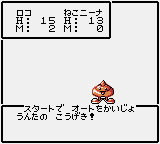
Then everyone acts, in an order set by speed, with a little chance in it each round. Messages page themselves after a few seconds. A few rules a player feels at once; the rest are in How battles work:
- Damage is attack − defence ÷ 2, with each side's figures varied by about a sixteenth each round. An attack that comes to nothing does 0 or 1.
- A blow can miss: about one in four between equals, more against a faster target.
- A critical hit comes about one blow in sixteen, and goes through most of the defence. The messages are 「かいしんの いちげき!!」 and 「つうこんの いちげき!!」.
- Defending halves the blows of those who act after the defender that round.
- Escape succeeds about as often as the party's share of the total speed: a party as fast as the monsters gets away about half the time. An event's battle can't be fled.
- Surprises: one battle in thirty-two opens with 「ふいを つかれてしまった!」 and a round for the monsters alone; one in thirty-two with 「せんせい こうげきの チャンス!」 and a round for the heroes alone, from which escape always works.
After a battle#
When the last monster falls, 「モンスターを やっつけた」. Then come the rewards:
- Experience: the monsters' total, shared among the heroes still standing. The fallen get none.
- Levels: a hero rises a level each time the experience passes the next step of the table, which starts 10, 25, 45, 70. Each stat grows by about its gain, with a little chance either way, and new spells come at the levels the maker set. HP and MP aren't refilled.
- Treasure: every monster killed can leave its treasure, so a battle can give several items.
- Gold: the monsters' total, not shared.
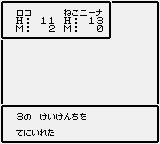
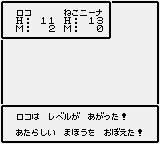
Three jingles close a battle, sounds 21 , 22 and 23 : by the order of the code, the victory's, the levels' and the treasure's.
After a battle won or fled, a fallen hero is back with 1 HP, and every status but poison and paralysis is gone.
Game Over#
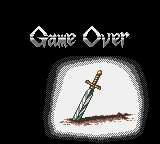
If the whole party falls, the Game Over screen comes up: a sword in the ground, with its own song. Any button goes on, back to the cartridge's title (or, in the user-game mode, to the game's opening). Nothing is kept: no save is written, and the game goes on only from a play save. An event can call the Game Over too.
The ending#
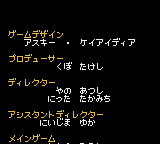
A game ends when an event gives the ending command エンディングに いく. A made game has no ending screen of its own: its last event scene is its ending, and then comes the cartridge's own staff roll. The game's author is named second, under ゲームデザイン (game design); the rest are RPG Tsukuru GB's staff, and last come 「©2000 アスキー 空想科学」 and 「Fin」. A button at the end goes back as the Game Over does. Nothing is saved, so a player who wants to keep a finished game should save before the last scene.
Test play#
Edit → Test Play テストプレイ runs your game as it stands, from Continue or From the Start. It plays like the real thing, with these extras, none of which any screen of the cartridge mentions:
Hold START while walking and the party walks through anything, walls, sea and mountains, in rooms and on the world map, a step every frame. Random battles still come.
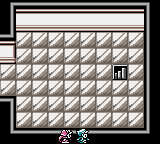
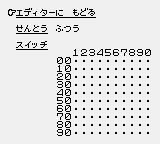
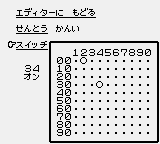
SELECT opens test play's menu , with play paused:
| Entry | Japanese | What it does |
|---|---|---|
| Back to the editor | エディターに もどる | Leaves the game for the editor menu (through the soft reset) |
| Battles | せんとう | Normal ふつう: battles as usual. Quick かんい: every battle is won at once, for 0 experience and nothing else. None なし: no random battles |
| Switches | スイッチ | Switches 1–100 as a 10 × 10 grid; A turns one on or off |
Besides these, by the code: a battle lost in test play restores the party instead of ending the game; the staff roll can be skipped with any button; and saves made in test play are tagged テスト, with Continue listing only those. A+B+SELECT+START goes back to the editor. The Game Over command and the ending, though, leave test play for the cartridge's title, not the editor.
The soft reset#
A + B + SELECT + START held together resets the game: from test play to the editor, from your game in the user-game mode to its opening, otherwise to the cartridge's title. Nothing is saved.
Fan-made reference material, one of the Eschaton Games Tsukuru guides. Not affiliated with the publishers of the titles it covers. Corrections and questions: contact@eschaton.games.